The Hard Water Reality Check: What Shower Filters Can and Can't Fix
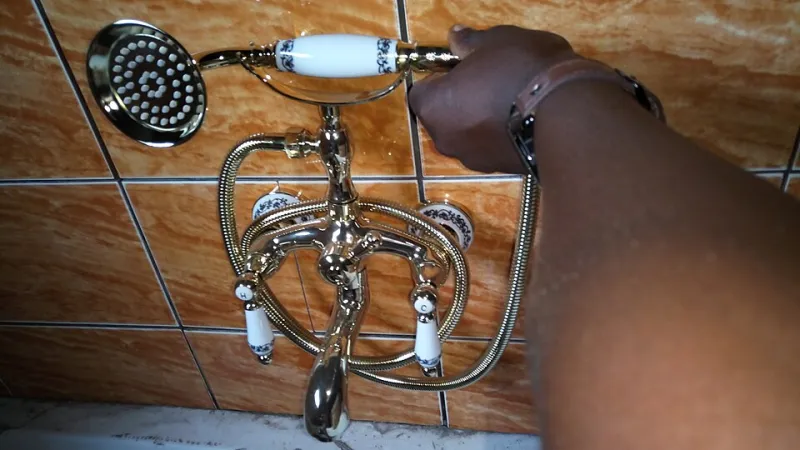
Photo: EzekielFokam, CC BY-SA 4.0, via Wikimedia Commons
Hard water is one of those things clients mention almost apologetically. They've moved house, or their area has switched supply, and suddenly the hair that used to behave feels coated, dull or weirdly heavy. The kettle has a fur collar. The shower screen is cloudy. And a small industry has sprung up promising that a £30 filter will give you salon water at home.
Here's the salon version: hard water is a real issue, but it's rarely the whole story, and shower filters are not the magic wand the adverts suggest.
First, the honest bit: most shower filters don't soften water
Hard water is water with a lot of dissolved calcium and magnesium. In the UK it's common in London, the South East, East Anglia, parts of the Midlands and other chalky areas. Soft water is more typical in Scotland, the North West and parts of Wales. If your kettle scales, you've got hardness.
A proper whole-house softener uses ion-exchange resin and salt to swap calcium and magnesium for sodium. It needs contact time, capacity and regeneration. A shower filter is a small cartridge in a plastic shell. Some contain carbon, vitamin C or KDF media, and they can reduce chlorine, sediment and some metals. That can genuinely help if your hair feels dry or your scalp reacts to chlorine. But they do not turn hard water soft in any meaningful, kettle-visible way. If a product claims to soften water without salt and without regeneration, be sceptical.
A filter is worth buying if you want less chlorine, less sediment or a nicer shower experience. It is not worth buying because you think it will fix calcium build-up on its own.
What mineral build-up actually feels like
Mineral deposits sit on the outside of the hair. They don't repair damage, but they can mask shine, make the cuticle feel rougher and interfere with how colour looks. Common signs:
- Colour fades faster or looks flatter than expected, especially blondes that go slightly muddy rather than bright.
- Curls feel less clumped and more frizzy, even with the same products.
- Mid-lengths and ends feel stiff or coated after washing.
- Hair takes longer to feel clean, or shampoo doesn't lather easily.
- The scalp feels tight or itchy, though this can have many causes.
It's worth saying that product build-up feels similar. A stylist can usually tell the difference by feeling the hair wet and dry, asking about your water and checking what you've been using. That's why a consultation matters more than a quiz on a bottle.
Clarify and chelate are not the same job
A clarifying shampoo removes product residue, oils and styling build-up. A chelating shampoo removes minerals and metals. They overlap a bit, but they're not interchangeable. If you've got hard water, you want chelating ingredients such as EDTA, phytic acid, sodium gluconate or citric acid, not just a strong detergent.
At home, a chelating wash every week or two is plenty for most people. If your hair is dry, colour-treated or curly, don't reach for it daily. Use it, then follow with a proper conditioner or mask. If you swim regularly, rinse immediately and chelate more often. If your scalp is sensitive, patch test and don't leave it on longer than the instructions say.
What a salon treatment can and can't fix
A salon chelating treatment is a deeper reset than a quick wash at home. It can lift the dulling film that makes colour look tired and curls feel rough. It can make hair feel softer and more flexible. What it can't do is reverse split ends, change the water in your flat or permanently stop minerals coming back.
Think of it as a reset, not a repair. If your hair is already damaged, chelation won't rebuild bonds. It might make the damage feel worse if you skip conditioning afterwards, because you've stripped the coating. Book it before a colour appointment if you're worried about build-up, or after a holiday with lots of swimming. A good stylist will tell you if your hair actually needs it rather than selling it as a seasonal add-on.
Product claims worth paying for
Look for chelating ingredients high up the list, not just the words 'hard water' on the front. A shampoo can call itself a hard water shampoo and still be mostly fragrance and mild surfactants. Fine if you like it, but don't expect a miracle.
For filters, check what the cartridge actually does. Carbon and vitamin C are useful for chlorine. KDF media can reduce some metals. None of that is the same as softening. Change the cartridge when the maker says, or you're just running water through a dirty sponge. If your water is very hard and you're bothered by scale on everything, a whole-house softener is the only real fix, and that's a plumbing conversation, not a hair product one.
The salon-led plan
Ask your stylist to feel your hair and tell you whether you're dealing with minerals, product or damage. Check your water supplier's hardness report if you're curious. Use a chelating wash fortnightly, or weekly if you swim. Keep a filter if it helps with chlorine, but don't expect it to soften the supply. Book a salon chelation treatment when your colour looks flat or your curls have lost their spring. And don't chase a perfectly soft-water result in a hard-water area; aim for hair that feels clean, conditioned and manageable.
Hard water is a fact of British life. A filter can be a useful bit of kit. It just isn't a fairy godmother.