The Postcode Effect: Why Your Blow-Dry Behaves Differently Across the UK

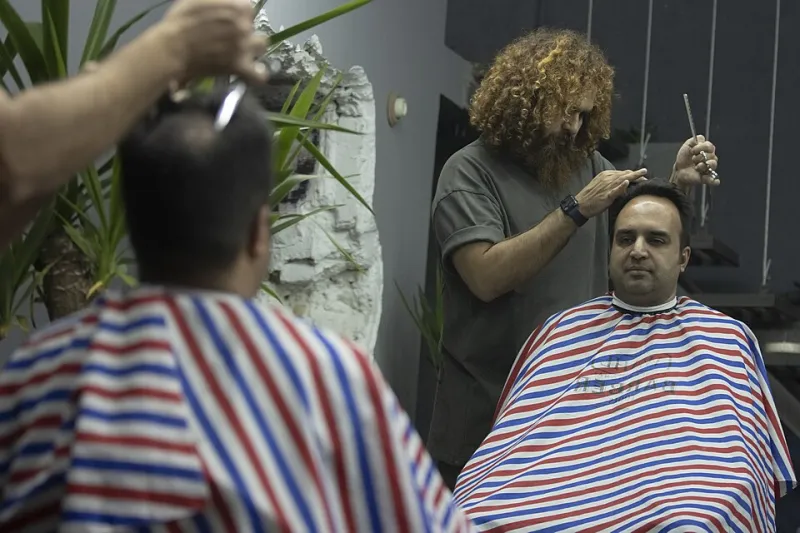
Photo: FaceMePLS from The Hague, The Netherlands, CC BY 2.0, via Wikimedia Commons
Your hair doesn't read the label on your shampoo. It reads the water coming out of your shower. That's why a routine that leaves hair soft and swishy in one part of the UK can turn it squeaky, dull or strangely stiff in another. It isn't your technique falling apart overnight. More often, it's the minerals in your local water.
At Tracey West Hair, we see this postcode effect in the chair all the time. Someone moves from a soft-water area to a hard-water city, books in because their colour looks tired and their ends feel rough, and assumes they need a whole new product wardrobe. Usually, the first job is to work out what their water is doing—and then build a sensible plan around it.
What hard water is actually doing to your hair
Hard water contains higher levels of calcium and magnesium. Those minerals are not evil, but they can cling to the hair shaft and interfere with how products lather, rinse and deposit. Over time, you can get a film that makes hair feel coated, less glossy and harder to hydrate. Colour can seem to fade faster, blonde tones can look flatter, and the scalp may feel tight or itchy after washing.
This doesn't mean hard water is damaging everyone's hair in the same way. Porosity, colour history, heat styling and how much product you use all matter. But if your hair suddenly feels like it has a personality change after a house move, hard water deserves a place on the suspect list.
Check your postcode before you blame your products
Your water supplier should publish hardness information for your postcode. It's usually on their website under water quality or hardness. You may see it in milligrams per litre of calcium carbonate, ppm, French degrees or Clarke degrees—annoying, but broadly comparable once you know the bands. As a rough guide, under 60 mg/l is soft, 60–120 is moderately hard, 120–180 is hard and above 180 is very hard. Always check your supplier's own figures rather than relying on a general map, because supply zones can be more local than people expect.
Generally, London and much of the south-east sit in the hard-to-very-hard bracket, while parts of Scotland, the north-east and some western areas tend to be softer. But 'generally' is doing a lot of work there. Parts of Wales, the Midlands and Yorkshire vary considerably. If you're renting, ask the landlord or check the supplier's postcode tool. A cheap water test strip can also give you a useful at-home clue.
Chelating and clarifying are not the same job
This is where a lot of bathroom cabinets go wrong. Clarifying shampoos are designed to remove product buildup—dry shampoo, styling cream, silicone, oil. Chelating shampoos go after mineral buildup, including calcium and magnesium. A clarifying wash may help with a heavy product load, but it won't necessarily shift hard-water film.
If your water is very hard, a chelating shampoo used occasionally can be genuinely useful. Think once a month for many people, or every few weeks if you have a lot of mineral exposure. If your water is softer, you may only need it after holidays, swimming or a spell of heavy styling. Don't reach for a chelating wash every time you shampoo. Overuse can leave hair feeling stripped and rough, especially on coloured or dry hair.
Look for ingredients such as EDTA, phytic acid or sodium gluconate on the label. Use the shampoo as directed, let it sit for a minute or two if the instructions allow, and follow with a conditioner or mask. A chelating shampoo is a treatment, not a new daily habit.
What we recommend in the salon
When someone comes in with dull, brittle-feeling hair and we suspect hard water, we start with a proper assessment. We look at porosity, scalp comfort, colour history and how the hair feels when wet. A demineralising or chelating treatment in the salon can be a useful reset, but it should be matched to the hair—not applied as a blanket fix.
We may also recommend a bond-building or moisturising treatment afterwards, because mineral removal can leave hair feeling temporarily drier. If the scalp is tight or flaky, we'll treat that separately rather than assuming every flake is dandruff. And if someone is about to have a colour appointment, we may suggest a chelating wash beforehand so minerals aren't sitting between the hair and the colour.
Weekly deep conditioning still has a place, but it won't remove mineral film. That's why some people feel like they've tried every mask on the shelf and nothing changes. The mask is doing its job; the issue is what's underneath it.
A realistic routine by water type
In a soft-water area, you can usually lean on gentle shampoo, regular conditioner and a clarifying wash when product buildup appears. In moderately hard water, alternate a clarifying wash with a chelating treatment every few weeks if hair feels coated. In very hard water, use a chelating shampoo on a schedule that suits your hair, clarify when you've used a lot of styling product, and keep heat protection consistent.
A shower filter can help with some impurities, but don't expect it to turn hard water into soft water. It's a supporting act, not a full water softener. And please skip the social media advice about scrubbing your scalp with bicarbonate of soda. It's harsh, it can irritate the scalp and it won't solve the underlying issue.
The chair verdict
Bring your postcode into the conversation. If you know your water is hard, say so at your next appointment. A good stylist can adjust your wash routine, recommend the right kind of treatment and stop you spending money on products that were never going to fix a mineral problem. Soft hair isn't just luck. It's often a case of knowing what your water is doing—and responding to it sensibly.