The First Ten Days: How to Keep Salon Colour From Sliding Away Before Party Season
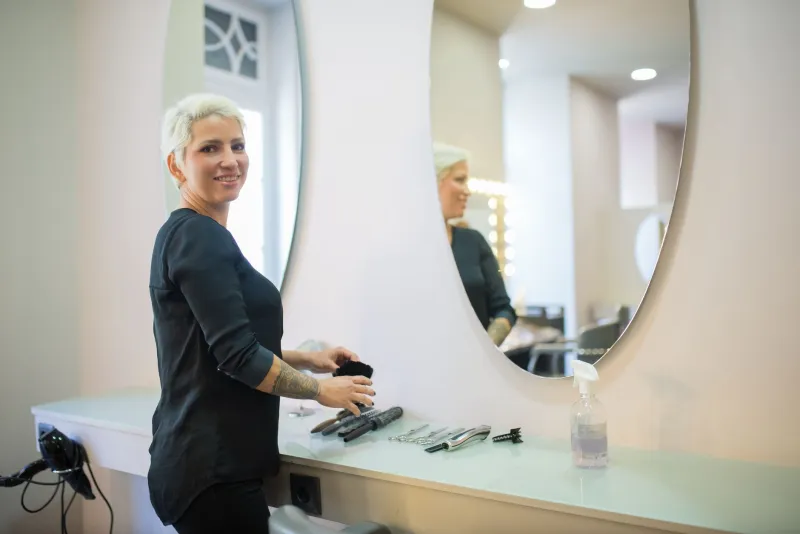
Ask anyone who colours their hair regularly and they will tell you the same thing: the appointment is the easy part. It is the ten days that follow that decide whether you walk into the Christmas do with the colour you paid for, or a softer, sadder version of it.
This is not a piece about when to book your pre-party colour. It is about what happens after you leave the chair — the small, unglamorous habits that either protect a fresh tone or send it down the plughole before the mulled wine is even out.
Why the first ten days carry so much weight
Fresh colour is still settling. The cuticle has been opened, pigment has been deposited (or lifted, or both), and the hair is in a slightly more porous state than usual. In simple terms, it is more open to everything — including water, heat, and the drying blast of central heating that comes with a British November.
That is why the first week and a half matters so much. You are not just washing hair; you are influencing how long the colour holds its tone. Get the basics right and you protect your investment. Get them wrong and you can lose a surprising amount of depth and shine before the party invitations have even landed.
Days one to three: hands off, mostly
If you can, leave the first wash for at least 48 hours. Seventy-two is better if your scalp will tolerate it. This gives the colour time to settle properly. It is not a myth — it is basic chemistry.
In those first few days:
- Skip the gym if it means a sweaty scalp on day one. If you do exercise, rinse with cool water only and skip shampoo.
- Avoid saunas, steam rooms and long hot baths. Heat and steam open the cuticle; you want it closed.
- Do not use clarifying shampoo or anything with a strong sulphate base. Save the deep clean for another week.
- Sleep on a silk or satin pillowcase if you have one, or a clean cotton one if not. Fresh colour can transfer onto a damp pillowcase, especially in the first 48 hours.
- Keep heat styling to a minimum. If you must blow-dry, use the lowest heat setting and a heat protectant.
Days four to seven: ease back into normal
The first wash is the big test. Use a colour-safe, sulphate-free shampoo — not because sulphates are evil, but because they are better at stripping pigment than you want in the first week. Focus the shampoo on the scalp, let it rinse through the ends, and follow with a conditioner or mask from mid-lengths to ends.
Keep the water lukewarm. Hot water feels lovely on a cold morning, but it opens the cuticle and encourages colour to leave. A final cool rinse helps smooth the cuticle back down; it is not a gimmick.
Heat styling can resume around day four or five, but be sensible. Use a heat protectant every time, keep straighteners under 180°C where possible, and do not flat-iron damp hair. If you are using a curling wand, use the lowest setting that actually holds the shape.
This is also the point where winter habits creep back in. Central heating dries the hair out, which makes colour look flatter faster. A leave-in conditioner or a light hair oil on the ends will help. You do not need much — a pea-sized amount is plenty.
Days eight to ten: party prep without panic
If you have a Christmas do coming up, plan your wash days around it. Washing the night before and styling in the morning often gives the best result. Day-two hair holds style better for many people, but fresh colour looks best on day one or two after a wash.
Dry shampoo is fine if you use it on the scalp only and brush it through. Do not spray it onto the mid-lengths and leave it there; it dulls shine and can leave a grey cast on darker colours.
If your colour looks slightly flat before the event, do not reach for a box dye or a clarifying treatment. A salon gloss or a quick toner top-up is a better shout if you are worried. Call the salon and ask; most stylists would rather see you for ten minutes than watch you undo their work with a supermarket box.
The winter habits that dull salon colour fastest
Some of these are obvious; others are sneaky.
- Very hot showers. Lovely in November, terrible for colour retention. Turn the temperature down a notch.
- Central heating and dry indoor air. Hair loses moisture, the cuticle roughens, and colour looks less glossy. A humidifier or a bowl of water near the radiator helps more than you would think.
- Hard water. If you live in a hard-water area, minerals can build up and make colour look dull. A shower filter can help, but it is not a miracle cure. A monthly chelating shampoo (not in the first ten days) can reset things.
- Clarifying shampoo used too often. Once a month is plenty for most people. Weekly clarifying strips colour and natural oils.
- Heat styling without protection. This is the big one. Repeated heat without a protectant makes hair porous, and porous hair loses colour faster.
- Wool hats and friction. Friction roughs up the cuticle. Line your hat with silk or wear a scarf between hat and hair if you can be bothered.
- Swimming in chlorinated pools. If you are on a winter sun break, wet your hair with fresh water before you swim and rinse thoroughly afterwards. A swim cap is not a fashion statement, but it works.
A simple day-by-day checklist
Day 1: No wash. No heat. Sleep on a clean pillowcase. Day 2: Still no wash if you can manage. Cool rinse only if needed. Day 3: First wash allowed (lukewarm, colour-safe shampoo, conditioner). Day 4: Heat styling can resume with protectant. Keep tools under 180°C. Day 5: Check in: does the colour still look even? If not, call the salon rather than DIY. Day 6: Deep condition mid-lengths to ends for ten minutes. Day 7: One week down. Assess shine and tone. Day 8: Plan your party wash. Wash the night before if you prefer morning styling. Day 9: Use dry shampoo only on the scalp if needed. Brush through. Day 10: Party day. Style as normal, with heat protectant, and enjoy it.
What to buy (by category, not brand)
You do not need a cupboard full of products. You need the right few.
- Colour-safe shampoo and conditioner: Sulphate-free or low-sulphate, designed for coloured hair.
- Heat protectant: A spray or cream you will actually use every time you pick up a tool.
- Leave-in conditioner or light oil: For ends, especially in centrally heated rooms.
- Deep conditioning mask: Once a week for ten minutes is enough for most hair types.
- Dry shampoo: For scalp refresh between washes, not for coating the lengths.
- Silk or satin pillowcase: A small upgrade that genuinely helps with friction and moisture loss.
When to call the salon
If your colour looks patchy, if your scalp is irritated, if the tone has shifted in a way you did not expect, or if you are simply not sure — call. Most salons would rather answer a question on day five than fix a problem on day fifteen. And if you are heading to a party and want a quick gloss or a blow-dry, book it now rather than the week of. December fills up fast.
The colour you leave with is not the colour you keep by accident. A little care in the first ten days goes a long way — and it is far cheaper than a corrective appointment in January.