Coat Check Hair: Why Your Blow-Dry Gives Up at the Door — and the Cloakroom Fix That Saves It

There’s a particular moment in December that every stylist knows. You’ve finished a blow-dry, the client looks brilliant, and you say the usual: don’t touch it, keep it out of the rain, enjoy the party. Then they come back two weeks later with a photo and a story about a coat check. The hair wasn’t ruined. It just met a British winter at the door.
Static is the obvious villain, but it’s not the whole story. The crackle and cling is one problem. The flattened crown and tired ends are another. If you treat them as the same thing, you’ll either over-spray the roots or smooth the life out of the mid-lengths. Neither is a great look under a Christmas jumper.
First, the enemy isn’t just the jumper
We blame knitwear because it’s the funniest thing to blame, but the setup is more boring than that. Hair behaves badly in winter because the air around it is dry. Central heating pulls moisture out of the room, hot tools add another hit, and then you wrap a wool coat, an acrylic scarf and a synthetic party top around it. Different fibres rub together, electrons get shuffled about, and dry hair holds the resulting charge. That’s the halo of flyaways you see in every cloakroom mirror.
There’s also a mechanical issue. A heavy coat collar and a tight scarf press the crown flat while the ends get rubbed the wrong way. Add a bit of drizzle on the walk from the taxi and you’ve got a blow-dry that’s been physically rearranged before the prosecco is poured. So the first rule is simple: don’t expect one product to fix both. You need a little charge control and a little structure.
The crackle versus the collapse
Crackle is static: hair lifting, clinging to your face, wrapping itself around your scarf like it’s trying to escape. Collapse is the shape going: roots flattened, ends piecey, the whole thing looking more Sunday morning than Saturday night. In the salon, I’d handle them in different places. Charge control belongs on the surface and mid-lengths. Root lift belongs at the scalp, and it needs to be light enough that it doesn’t turn into a greasy patch under the venue lights.
If your hair is fine, don’t reach for a heavy oil before a party. It’ll kill the static for ten minutes and then weigh everything down. If your hair is thick or curly, a small amount of leave-in can help, but the key is distributing it from mid-lengths to ends, not dumping it at the root. A light anti-static mist or a flexible hairspray on a brush is usually more useful than another layer of serum.
What actually earns a place in your bag
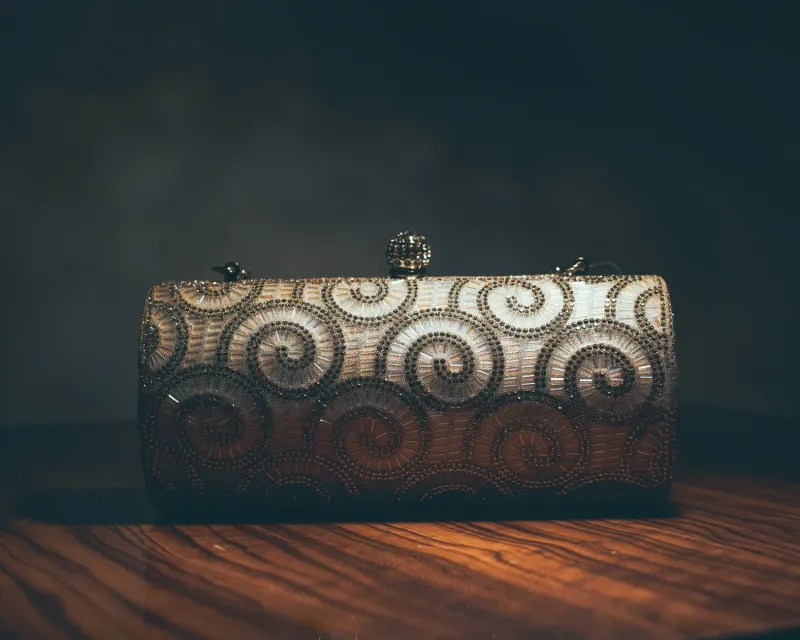
I’m not a fan of filling a clutch with seven miniature products you’ll never use. Pick two things. First, a small smoothing mist or flexible spray — something you can apply to a brush rather than directly to the head so you don’t get a wet patch. Second, a fine-tooth comb or a small bristle brush. A boar-bristle brush is lovely for smoothing the surface, but it won’t create volume. A comb is better for lifting roots without disturbing the whole shape.
And be sceptical of the old dryer-sheet trick. It can work in an emergency, but it leaves a film that some hair colours and extensions really don’t like. If you want to use one, keep it for the inside of a coat lining or a scarf, not for your hair. A tiny bit of hairspray on a brush is cleaner. So is simply using your hands to smooth the surface after you’ve taken your coat off.
The two-minute cloakroom fix
Here’s what I’d do if I were in the queue for the cloakroom with a glass in one hand and a mirror I don’t trust.
Take the coat off slowly and shake it out away from your head. Static loves a dramatic removal. Then use your fingers to lift the roots at the crown — not a comb, not a brush, just fingertips — and let the shape settle. If you’ve got a light mist, spray it onto a brush or your palms, never straight at the scalp, and smooth from the mid-lengths down. For flyaways around the face, a very small amount of flexible spray on a fingertip will do more than a cloud of product.
If you’ve got nothing with you, don’t panic. A tiny amount of hand cream on the ends can calm things down, but use less than you think. The real trick is to stop touching the hair. Every time you push a flyaway behind your ear, you’re adding charge back in. Let it settle for a minute. Nine times out of ten, the hair is fine; it just needs to stop being manhandled.
What to ask your stylist before party season
If this happens every year, it’s worth mentioning at your next appointment. We can look at whether your cut is creating too much weight at the crown, whether your colour is leaving the hair drier than you realise, or whether your at-home routine is adding to the problem. A hydrating treatment in the salon won’t stop physics, but it can make hair less likely to hold a charge. A trim can remove the Velcro ends that catch on scarf fibres.
At home, wash with lukewarm water rather than scalding, don’t skip conditioner, and give the mid-lengths a little leave-in before you blow-dry. If you’re using heated tools, keep them moving. Dry, overworked hair is static’s favourite customer.
The bottom line
Your blow-dry isn’t failing because you did something wrong. It’s failing because winter in the UK is a gauntlet of dry air, wool, acrylic and overheated rooms. Dress in layers you can take off without dragging a jumper over your head, choose a silk or satin scarf lining if you can, and keep one lightweight smoothing product in your bag. Then use the cloakroom mirror for a two-minute reset, not a full re-style. Hair that survives a Christmas jumper isn’t magic. It’s just a bit of preparation and a very light touch.