Two Wheels, One Blow-Dry: The Commute Cut That Works With Your Helmet
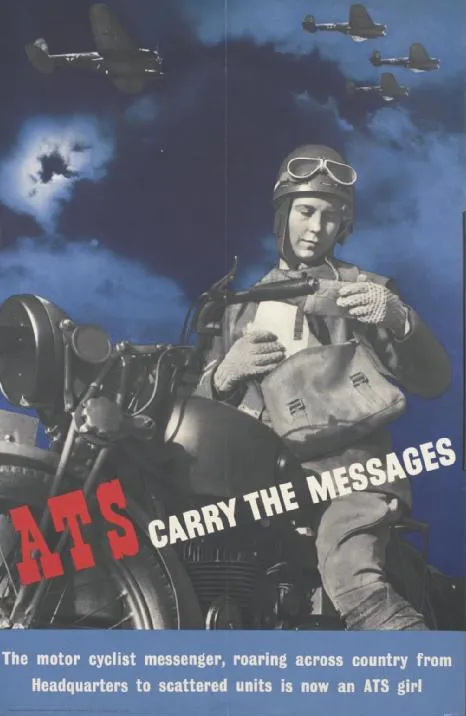
Photo: Auxiliary Territorial Service (publisher/sponsor), Pick, Beverley (artist), Field Sons and Co Ltd, Bradford (printer), Her Majesty's Stationery Office (publisher/sponsor), Public domain, via Wikimedia Commons
Helmet hair usually gets blamed on the helmet. Fair enough — it's the thing pressing on your head. But after enough mornings behind the chair, I can tell you the bigger issue is often the cut underneath it. A helmet doesn't ruin every hairstyle; it exposes the ones that were never built for pressure, static and a quick turnaround. If you cycle to work, your haircut has a second job: looking presentable after being squashed under a shell for twenty minutes.
That doesn't mean choosing a 'safe' cut you don't actually like. It means asking for one with the right architecture.
Start With the Helmet, Not the Hair Photo
Most consultations start with a picture. For cyclists, start with the helmet. Tell your stylist how it fits: does it sit low on your forehead? Does it press behind your ears? Do you wear a cap underneath? How long is your commute, and do you take the helmet off and put it straight back on at lunch? These details change what I'd recommend more than a screenshot of a model with a perfect bend.
Ask for a cut that leaves breathing room where the helmet sits. If your hair is very dense at the crown, a few internal layers can stop the top from collapsing into a flat shelf. If you have a cowlick or a double crown, say so — that spot will show up the moment the helmet comes off. A stylist can cut around it rather than pretending it isn't there.
Also be honest about time. If you have four minutes in the office bathroom, don't book a cut that needs a round brush and a prayer. The best commute cut is the one you'll actually finish.
Lengths That Cope With Pressure
There's no single helmet-proof length, but some shapes recover better than others.
A bob that sits between jaw and collarbone is a strong choice because it has enough weight to fall back into line after being pushed around. Ask for a slightly deeper point at the front and softer internal layers — not a heavy, one-length slab that will crease at the helmet rim.
Shoulder-length hair works well if it's cut with movement rather than a thick curtain of layers. Too many short face-framing pieces can look great for ten minutes and then spring out of shape under a helmet strap. Keep the perimeter clean and put the movement inside the shape.
Very short crops can be brilliant, but they need regular trims to stay sharp. If you're committed to a pixie or a short back and sides, book every four to six weeks — otherwise the helmet will flatten the shape and the grow-out will do the rest. Longer layers past the shoulders are probably the easiest to reset: a quick mist and a rough dry brings them back faster than a precision bob.
The Fringe Is the Real Test
Fringes and helmets have a complicated relationship. A thick, blunt fringe is the hardest to rescue because it creases along the helmet line and has nowhere to hide. If you love a fringe, ask for one with a bit of texture and a slightly longer length — enough to sweep aside or pin back on the grim days.
Curtain bangs are more forgiving because they already want to move away from the face. A soft, side-swept fringe is another good option. If you're growing out a fringe, tell your stylist at the consultation; they can shape the rest of the cut so the in-between stage doesn't turn into a daily battle.
One practical trick: ask for the fringe to be cut dry, or at least checked dry. Wet hair sits differently, and a fringe that looks perfect in the salon chair can shrink up under a helmet.
The Five-Minute Office Reset
You don't need a full kit. You need water, heat and a little direction.
At the lift mirror, take the hair down, give the roots a quick shake and mist the mid-lengths and ends with water — not soaking, just enough to remind the hair which way it falls. If you have a hairdryer in the office (or a decent hand dryer and patience), blast the roots with warm air, then finish cool to set the shape. A small round brush is useful, but fingers and a bit of tension will do for most cuts.
For fringes, dampen the roots only and blow-dry side to side before styling. That stops the centre parting from setting in. If you have curly or coily hair, skip the water mist and use a light refresh spray or a dab of conditioner mixed with water; then scrunch and leave it alone. The aim is to restore the cut, not to redo the whole blow-dry.
What to Ask For — and What to Book
Ask for a commute cut rather than a helmet cut. It sounds like a small difference, but it tells your stylist you want a shape that works with your life, not a style that only works on a Saturday. Bring your helmet to the consultation if you can. It feels odd, but it's the quickest way to show where the pressure lands.
Book a trim before the shape goes soft, not after. Most cyclists need a tidy-up every six to eight weeks; shorter cuts need more. And if you're changing your commute — longer ride, new helmet, winter layers — mention it. Your hair doesn't need a whole new identity, just a small adjustment to the architecture.
Helmet hair isn't a life sentence. It's a cut problem, and cut problems have salon solutions.